
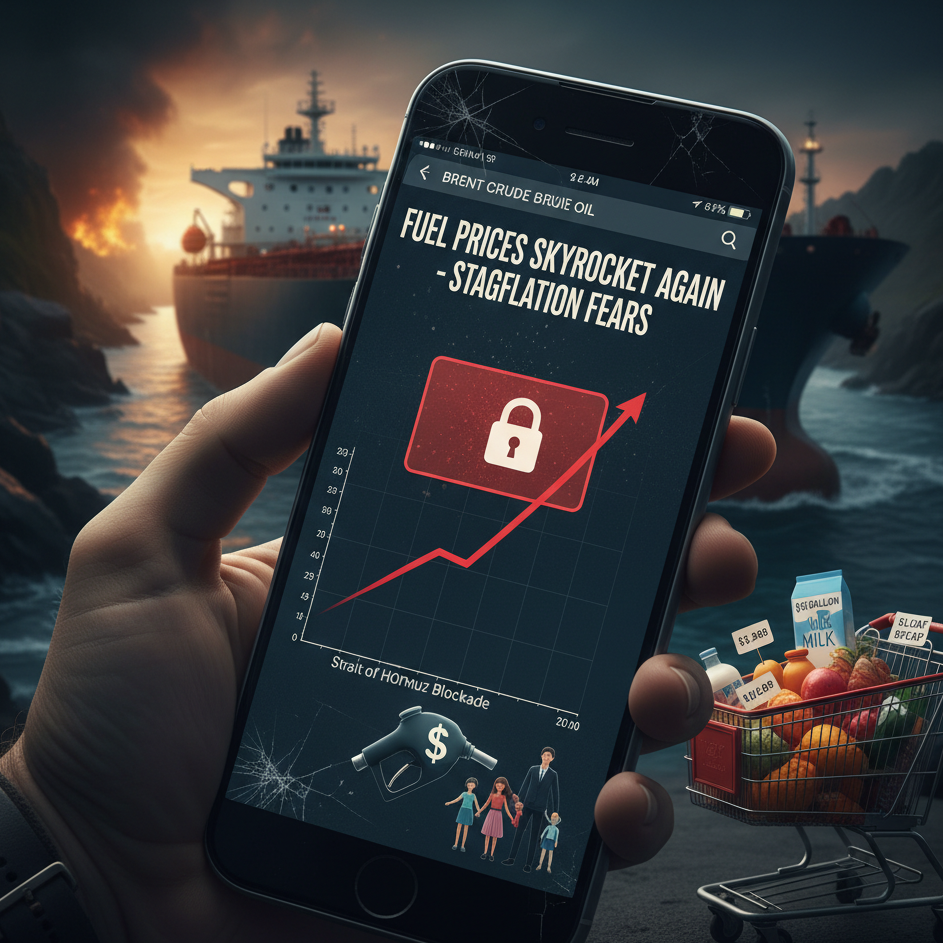
If you’ve visited a gas station this week, you’ve felt the “pain at the pump.” After a period of relative stability in 2025, fuel prices have taken a sharp, aggressive turn upward in April 2026.
But why is this happening now, and how long will it last? Here is a breakdown of the current energy crisis and what it means for your wallet.
The “Why”: A Perfect Storm in the Middle East
The primary driver of the current price hike is the ongoing conflict in the Middle East, which escalated significantly following the events of late February 2026. Geopolitical tensions have reached a boiling point, leading to:
- The Strait of Hormuz Selective Blockade: This waterway is the world’s most critical oil chokepoint, handling roughly 21% of global seaborne oil trade. As of April 2026, a “permission-based” transit regime has effectively halted 70-90% of regular tanker traffic. This disruption has sent Brent crude oil prices soaring from $70 earlier this year to nearly $120/bbl.
- Infrastructure and Tanker Attacks: Repeated strikes on regional energy installations and the targeting of commercial vessels have forced major shipping firms (like Maersk and Hapag-Lloyd) to suspend operations in the area, significantly tightening global supply.
- Production Force Majeure: Major producers, including Qatar, Kuwait, and the UAE, have been forced to declare force majeure on contracts as storage facilities fill up with oil that simply cannot be shipped out.
Global Impact: Beyond the Gas Station
This isn’t just a local issue; it’s a global phenomenon that is beginning to impact every sector of the economy.
- Transportation & Logistics: In the UAE, fuel rates jumped by as much as Dh2 per litre on April 1st. In the USA, the national average has topped $4.00 per gallon, with diesel—the backbone of trucking—rising even faster.
- The Food Crisis Connection: High oil prices are directly inflating food costs. Energy is required for everything from manufacturing nitrogen-based fertilizers (derived from natural gas) to the literal “last-mile” delivery of groceries. The World Food Programme (WFP) warns that persistent high prices could push millions into acute hunger as purchasing power erodes.
- Stagflation Risks: Economists are increasingly using the word “stagflation”—a dangerous mix of stagnant economic growth and high inflation. With oil doubling in price since early 2026, central banks are in a dilemma: raise interest rates to fight inflation or lower them to prevent a recession.
How to Protect Your Budget
While you can’t control global oil markets, you can control how you react:
- Prioritize Maintenance: A well-maintained engine and properly inflated tires can improve fuel efficiency by up to 3-5%.
- Consolidate Trips: Plan your errands in one loop rather than multiple short trips.
- Use Fuel Apps: Use real-time tracking apps to find the best prices in your neighborhood before you leave the house.
- Embrace “Work from Home”: In countries like Pakistan, governments have already enacted 50% work-from-home policies and shortened workweeks to conserve national fuel reserves. If your employer allows it, utilize these remote options.
The Outlook for 2026
The immediate future depends entirely on the duration of the maritime disruptions. While the IEA has released emergency reserves to cushion the shock, these are not infinite. If the Strait of Hormuz remains restricted through the summer, analysts warn that Brent crude could approach its 2008 record of $147/bbl, potentially triggering a global recession.
What are you doing to save on fuel this month? Let us know in the comments below!
Great breakdown. The shift to work-from-home in Pakistan seems like a necessary move, but I’m really feeling the ‘food crisis’ link you mentioned at the grocery store. Fuel prices are basically a tax on everything we eat at this point. How much higher do you think Brent crude will actually go before things stabilize?